2026 Best Aluminium Foil Paper for Food Packaging?
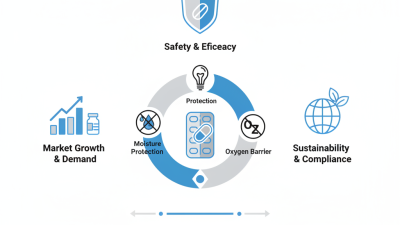
Choosing the right aluminium foil paper for food packaging in 2026 will require more than checking thickness or price. The strongest option must protect food from light, oxygen, moisture, grease, and unwanted aromas. It should also seal reliably during filling, transport, refrigeration, and reheating. A thin foil lid may look efficient, yet one small pinhole can weaken the entire barrier. Real performance depends on foil quality, paper structure, adhesive selection, printing inks, and converting control.
Guido Aufdemkamp, Executive Director of the European Aluminium Foil Association, has stated, “Aluminium foil is a permanent material and can be recycled again and again without losing its properties.” This principle matters for modern food packaging. However, recyclability is not automatic. Paper and foil laminates may require suitable collection and separation systems. Local recycling infrastructure also differs widely. That detail is easy to overlook.
This guide examines the best aluminium foil paper for food packaging through a practical, evidence-based lens. It considers barrier protection, food-contact safety, heat resistance, seal strength, sustainability, and total packaging performance. Testing should include pinhole inspection, migration assessment, seal evaluation, and storage trials. Supplier certificates are useful, but they should not replace independent verification. The perfect material may not exist. A package that protects delicate biscuits may perform poorly with oily sauces or acidic foods. That is why product conditions must guide the final choice, not marketing claims alone.
Set the 2026 Benchmark: 6–200 μm Foil Gauges and Barrier Data (EAFA)
2026 Best Aluminium Foil Paper for Food Packaging?
The 2026 benchmark should begin with foil gauge, not appearance. Aluminium foil from 6–200 μm serves very different packaging functions. Thin gauges reduce material use and suit flexible laminate structures. Thicker gauges improve stiffness, puncture resistance, and handling during filling. However, thickness alone does not guarantee protection.
Following EAFA terminology, barrier evaluation should include oxygen transmission, water vapour transmission, light blocking, and pinhole resistance. A 6–12 μm foil may perform well when laminated correctly, yet one small crease can weaken its barrier. Foil near 20–40 μm offers a practical balance for many food applications. Gauges above 100 μm provide strength, but they may increase cost, forming difficulty, and material weight. Test results should reflect the finished structure, not foil alone. Seal quality matters too. This is often overlooked.
Tips: Match gauge with product sensitivity, filling speed, and distribution conditions. Request barrier data at stated temperature and humidity. Inspect folds, edges, and seals after transport simulation. Do not treat an EAFA reference as a substitute for package validation.
A useful specification lists gauge tolerance, alloy condition, pinhole limits, and laminate details. It should also identify the test method and measurement unit. Some supplier data looks precise but lacks test conditions. That deserves questioning. The imperfect truth is simple: laboratory performance can change during converting, printing, and repeated flexing. Food-contact compliance must be confirmed for the complete packaging system.
Aluminium Foil for Food Packaging: Gauge and Material Mass
Illustrative foil gauges from 6 to 200 μm. Mass per unit area is calculated using an aluminium density of 2.70 g/cm³; it is a material estimate, not a packaging performance specification.
Undamaged, continuous aluminium foil provides an effective barrier to light, gases and moisture. In finished packs, pinholes, folds, seals and laminate construction affect actual barrier performance, so verify package-level test data for the intended application.
Screen Food-Contact Safety Against ASTM B479, FDA, and EU 1935/2004
Choosing aluminium foil for food packaging requires more than checking thickness or shine. ASTM B479 describes requirements for annealed aluminium and aluminium-alloy foil, including dimensions and mechanical properties. It is not a food-contact safety approval. Treat it as a material specification, not proof that a finished package is safe.
Check the complete structure. A foil tray, lid, or wrapper may include coatings, inks, adhesives, or seal layers that contact food. Ask suppliers for traceable material declarations and test reports relevant to the intended food type, contact time, and temperature. Under FDA requirements, confirm that each food-contact component is suitable for its specific use. In the EU, Regulation 1935/2004 requires materials to avoid transferring substances to food at levels that could endanger health or alter food unacceptably. The details matter.
Test the real package. Acidic tomato sauce, salty cheese, and hot takeaway meals create different conditions. Migration testing should reflect those conditions, rather than rely on a generic certificate. Keep lot records and review changes to coatings or suppliers. Paperwork helps, but it is not the whole story. I would still question a report that names the foil yet ignores the sealant touching the food. Finish, seams, and handling can affect performance too.
Compare 6–20 μm Laminates by Light, Oxygen, Moisture, and Seal Barriers
2026 Best Aluminium Foil Paper for Food Packaging?
Choosing foil by thickness alone can mislead. In a 6–20 μm laminate, aluminium foil blocks light effectively when the layer is continuous. It also provides a strong barrier to oxygen and moisture. Real performance depends on pinholes, flexing, laminate structure, and pouch quality. A thin sample may look excellent on a flat test sheet, then lose protection after repeated handling.
At around 6–9 μm, foil can suit lightweight packs where cost and flexibility matter. It needs careful converting, since thin foil is more vulnerable to pinholes and damage. Around 10–15 μm offers a practical middle range for many dry or moisture-sensitive foods. At 16–20 μm, the foil layer is generally more robust, but added thickness does not guarantee a better package. The polymer layers, adhesive bond, and finished seals matter too. Foil is not the seal. The sealant layer must soften at the selected temperature, pressure, and dwell time to form a reliable closure.
Tips: Ask for barrier results on the finished laminate, not foil alone. Check oxygen and water-vapour transmission rates, then test seal strength and leakage after filling. Compare samples after bending or transport simulation. One detail is easy to overlook: sealing jaws can leave weak channels if product crumbs cross the seal area. I would not choose by micron number alone; actual line trials can still surprise you.
2026 Best Aluminium Foil Paper for Food Packaging? — Compare 6–20 μm Laminates by Light, Oxygen, Moisture, and Seal Barriers
Comparison guide for common foil-laminate constructions. Barrier figures are indicative targets for intact, well-made laminates—not guaranteed values. Actual results depend on the complete structure, converting quality, seals, flexing, and the specified test method.
| Foil gauge |
Example laminate structure |
Light barrier |
Oxygen barrier |
Moisture barrier |
Seal-barrier contribution |
Typical considerations |
| 6 μm |
PET / Al foil / PE |
Opaque when intact |
Very high when intact; pinholes and flex damage can reduce performance |
Very high when intact; pinholes and flex damage can reduce performance |
Provided mainly by the inner PE sealant layer and the seal quality |
Lightweight option; thinner foil is more sensitive to handling and conversion defects. |
| 7 μm |
PET / Al foil / PE |
Opaque when intact |
Very high when intact; laminate-level results depend on defects and test conditions |
Very high when intact; laminate-level results depend on defects and test conditions |
PE provides the heat-seal surface; foil is not itself a heat-seal layer |
Common lightweight choice where packaging weight and cost are priorities. |
| 9 μm |
PET / Al foil / PE or CPP |
Opaque when intact |
Very high when intact; verify finished-pack performance after flexing |
Very high when intact; verify finished-pack performance after flexing |
PE or CPP can form the seal; seal strength and leak resistance require validation |
A practical balance of barrier, flexibility, and material use for many flexible packs. |
| 12 μm |
PET / Al foil / PE or CPP |
Opaque when intact |
Very high when intact; performance is governed by the whole laminate and its integrity |
Very high when intact; performance is governed by the whole laminate and its integrity |
Seal layer selection and process settings determine sealability |
More robust foil layer than lightweight gauges; assess forming, folding, and package use. |
| 20 μm |
PET / Al foil / PE or CPP |
Opaque when intact |
Very high when intact; defects, seams, and closures remain potential pathways |
Very high when intact; defects, seams, and closures remain potential pathways |
Heat sealing is provided by the sealant film, not by the thicker foil |
Heavier and generally more resistant to handling damage; may be less suitable for applications needing easy flexing. |
How to interpret barrier performance: Aluminium foil is effectively impermeable to light, oxygen, and water vapour when continuous and free of pinholes. Finished-laminate transmission depends on foil defects, adhesive coverage, flex cracking, edges, seals, and package design; a foil thickness alone does not establish a verified OTR or WVTR value.
For specification: Request measured oxygen transmission rate (OTR) and water-vapour transmission rate (WVTR) for the finished laminate, with test method, temperature, relative humidity, and conditioning stated. Also validate seal strength and leak integrity on the actual pack. “Aluminium foil paper” is commonly used informally; these products are typically foil-based flexible laminates rather than paper alone.
Rank the Best Option by Cost, Recyclability, and Life-Cycle Data
For 2026 food packaging, rank materials by the job they must do, not by appearance alone.
Plain aluminium foil earns the strongest barrier score: it blocks light, moisture, and odours, helping protect foods such as butter or coffee. It can also be recycled where local facilities accept clean foil. Scrunch it into a loose ball; tiny, greasy scraps may be missed during sorting. A practical cost check should include foil thickness and the amount needed per package, not just price per kilogram.
Foil laminated to paper ranks lower for recyclability, despite its useful stiffness and printable surface. The bonded layers can be difficult to separate, so some facilities may reject the package. Coated paper without foil may be easier to handle in certain systems, but grease barriers and moisture resistance vary. Check the actual package structure. It matters.
Life-cycle data can change the ranking. Aluminium production is energy-intensive, while recycled content can reduce its footprint; transport weight and package thickness also affect results. Compare figures using the same unit, such as emissions per 1,000 packed portions, and check whether the study includes production, transport, and end-of-life treatment. Data is not always comparable. I would treat a single “greenest” label cautiously, especially when the supplier gives no recycling assumptions or material breakdown.