Fam Ti

Why Are Aluminium Spout Pouches Ideal for Global Buyers?

Why Are Aluminium Spout Pouches Ideal for Global Buyers?

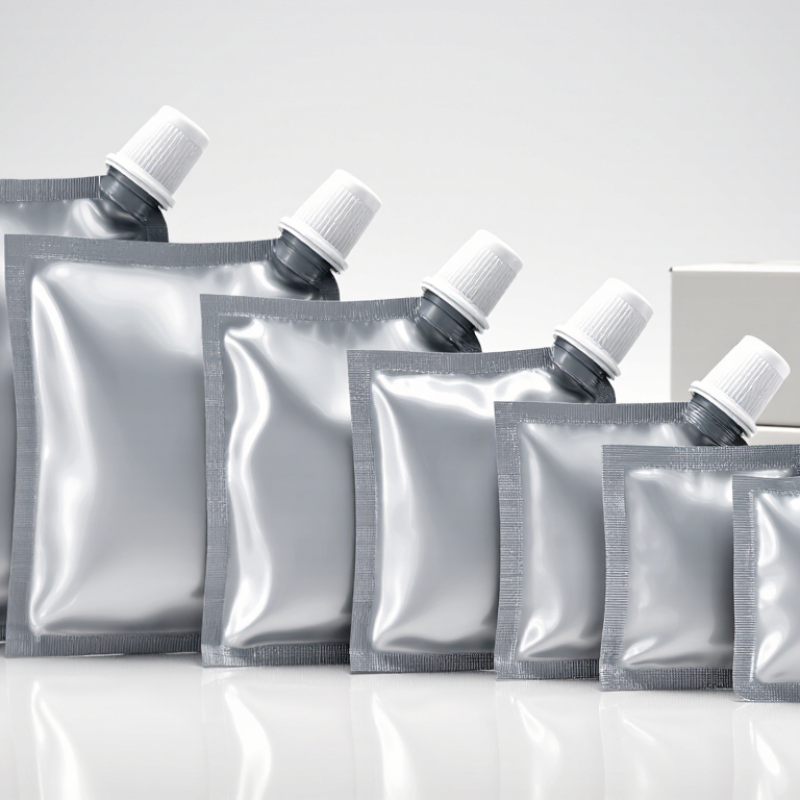
Global buyers increasingly examine packaging beyond appearance. They consider transport weight, filling efficiency, product protection, shelf presentation, and end-of-life options. An aluminium spout pouch can support these priorities through a lightweight structure, strong barrier performance, and convenient dispensing.

Its aluminium layer helps protect sensitive products from light, oxygen, and moisture. That matters during long-distance shipping, warehouse storage, and changing climates. A pouch weighing only a few grams can replace a heavier rigid container. More units may fit on one pallet. Freight costs can fall, although results depend on pouch design, filling equipment, and product density.

Alison Keane, President and CEO of the Flexible Packaging Association, has said, “Flexible packaging uses fewer resources to package products effectively.” This principle helps explain the international interest in aluminium spout pouch solutions. The format can support sauces, beverages, personal-care products, and household liquids. Spouts also offer controlled pouring, resealable use, and fewer accidental spills.

Practical details still matter. Buyers must check seal strength, nozzle compatibility, migration testing, puncture resistance, and filling-line speed. A visually impressive pouch can fail if its seal wrinkles. That lesson is easy to overlook.

Recycling can also be complicated. Multilayer structures may not fit every local collection system. Responsible sourcing therefore requires clear material specifications, realistic disposal guidance, and region-specific compliance checks.

The strongest choice is not always the cheapest pouch. It is the format that protects the product, performs reliably, and matches the destination market. Some assumptions still need testing. Sample trials, transport simulations, and supplier audits remain essential before global purchasing decisions.
Why Are Aluminium Spout Pouches Ideal for Global Buyers?

Material Anatomy: 7–9 μm Aluminum Foil Delivers Light and Gas Barrier

Why Are Aluminium Spout Pouches Ideal for Global Buyers?

Material Anatomy: 7–9 μm Aluminum Foil Delivers Light and Gas Barrier

A 7–9 μm aluminum foil layer measures only 0.007–0.009 mm thick. Using aluminum’s density of 2.70 g/cm³, it weighs roughly 19–24 g/m² before lamination. This helps reduce material weight while maintaining strong protection. The European Aluminium Foil Association describes continuous foil as an effective barrier against light, oxygen, moisture, and aromas. That matters during long export routes, warehouse storage, and repeated temperature changes.

The foil layer also supports measurable quality control. Oxygen transmission should be tested under ASTM D3985, while moisture transmission commonly follows ASTM F1249. Results depend on the complete laminate, not foil thickness alone. Pinholes, folds, poor adhesive bonding, and weak spout seals can reduce real-world performance. Small defects matter.

In converting practice, the spout area deserves extra attention. Heat can distort nearby layers, and over-tight filling equipment may stress the seal. The Flexible Packaging Association’s technical resources emphasize that package performance relies on material selection, sealing, and testing together. A pouch may look robust but still fail after vibration testing. I would avoid promising “zero transmission” without test conditions, because barrier values change with temperature, humidity, and measurement methods. That caution is easy to miss.

Representative transmission rates for common flexible-packaging layers under typical test conditions. The 7–9 μm aluminum foil layer provides near-zero oxygen and moisture transmission and blocks light, helping protect sensitive contents during long-distance storage and transport. Lower values indicate stronger barrier performance; actual results vary with laminate structure, sealing quality, pinholes, and test conditions.

Protection Metrics: ASTM F1249 and ASTM D3985 Quantify WVTR and OTR

Aluminium spout pouches appeal to global buyers because their foil layer can provide strong protection from moisture, oxygen, light, and aroma loss. Yet barrier performance should be measured, not assumed.

ASTM F1249 quantifies water vapor transmission rate, or WVTR, using a modulated infrared sensor.

ASTM D3985 measures oxygen transmission rate, or OTR, through a coulometric sensor.

These results help buyers compare materials for sauces, powders, concentrates, and other sensitive products. However, test conditions matter. Temperature, relative humidity, film thickness, and sealing quality can change the outcome. A pouch with excellent laminate data may perform poorly if its spout seal is weak. The finished package deserves attention.

A test report is not the whole story. It is easy to overtrust one low number. In real distribution, folding, filling pressure, stacking, and temperature changes may create tiny channels. This is where practical packaging experience becomes important. Buyers should request testing on production-representative pouches, not only flat film samples.

Tips: Ask for WVTR and OTR values with test conditions clearly stated.

Check whether the report covers the complete pouch, including the spout and seals.

Review migration, seal strength, and drop-test data for the intended product.

If data seems perfect, ask more questions.

Filling Range: Retort Pouches Commonly Withstand 121°C for 30–60 Minutes

Aluminium spout pouches appeal to global buyers because they combine low shipping weight with strong protection. Their layered structure helps limit light, oxygen, and moisture exposure. This matters for sauces, soups, dairy products, and other heat-processed foods. The Flexible Packaging Association’s 2024 State of the Flexible Packaging Industry report valued the U.S. market at approximately 39.8 billion dollars in 2023. That scale reflects continued demand for lightweight flexible formats.

Retort pouches commonly withstand 121°C for 30–60 minutes depending on the product, pouch construction, and validated process. At this temperature, thermal processing can reduce harmful microorganisms while preserving commercial sterility. However, the number alone is not enough. Product acidity, thickness, filling temperature, headspace, and seal quality all affect safety. Codex Alimentarius guidance on low-acid canned foods emphasizes scheduled processes and validated thermal treatment, not assumptions.

The spout needs careful attention. A weak seal can fail after retorting, transport, or repeated opening. Experienced converters normally test burst strength, seal integrity, migration performance, and sterilization resistance. Testing should follow the buyer’s product formula and local requirements. Some suppliers describe every retort pouch as identical. That is an oversimplification. Aluminium foil, adhesive layers, and spout materials may respond differently under heat. Global buyers should request process records, test data, and samples before approving large production. Mistakes here are expensive.

Logistics Value: Flexible Packs Can Reduce Shipment Weight Versus Rigid Packs

Global buyers often assess packaging by more than shelf appearance. They also measure freight weight, pallet space, and handling efficiency. Aluminium spout pouches can reduce shipment weight compared with many rigid packs. Their thin structure uses less material while maintaining a practical filling format. Empty pouches also nest closely before filling, leaving fewer air gaps during storage and transport. Every kilogram matters.

In a controlled packaging comparison, a 35-gram rigid container and a 12-gram pouch create a 230-kilogram difference across 10,000 units. That reduction can lower pallet weight and improve vehicle payload use. Cartons may also hold more empty pouches than empty bottles or cans. Small gains become significant across international shipments. However, the real result depends on pouch size, film structure, spout design, and carton layout.

A lighter pack is not automatically better. The spout, cap, barrier layer, and outer carton can add unexpected weight. Pouches may also need careful stacking to prevent compression damage during long transit. Practical trials should include drop testing, seal checks, pallet stability, and temperature exposure. Shipment data should be recorded instead of estimated from supplier claims alone. This approach gives buyers a clearer view of total logistics value, although some savings may disappear when stronger protection is required.

Export Readiness: EU Packaging Rules Target 70% Recycling by Weight by 2030

Why Are Aluminium Spout Pouches Ideal for Global Buyers?

The EU’s packaging direction is becoming stricter, with a 70% recycling-by-weight target set for 2030. This changes how global buyers assess aluminium spout pouches. Lightweight packaging can reduce transport emissions and warehouse space. A filled pouch may also use fewer materials than a rigid container. That matters when shipping thousands of units across borders.

Yet aluminium pouches are not automatically recyclable. Many use multilayer films, aluminium foil, plastic seals, and a separate spout. Local recycling facilities may struggle to separate these layers. Buyers should request the exact material structure, recycling assessment, food-contact declaration, and migration test results. Ask for evidence, not attractive claims.

Design details affect export readiness. A smaller spout can reduce material use. Clear sorting instructions help consumers in different markets. Consistent pouch dimensions can improve carton loading and reduce damaged units. Suppliers should also explain whether the pouch matches current EU design-for-recycling guidance. Requirements may evolve. That uncertainty deserves attention.

Some practical questions remain. Can the pouch enter an existing collection stream? Is the printed ink suitable for the intended application? Does the closure use compatible materials? A factory with documented quality controls, batch testing, and traceable raw materials offers stronger reliability. Still, no format fits every market. A pouch may perform well in one country and face recycling limits in another.

Why Are Aluminium Spout Pouches Ideal for Global Buyers?
Export Readiness: EU Packaging Rules Target 70% Recycling by Weight by 2030

Evaluation Dimension Verified Data / Export Implication Why It Matters to Global Buyers Reference Basis
EU recycling target The EU packaging framework sets a target of at least 70% of packaging waste recycled by weight by 2030, with higher targets planned for 2035. Suppliers need packaging designs, material declarations, and recycling evidence that can support destination-market compliance. EU Packaging and Packaging Waste Regulation (EU) 2025/40
Aluminium recycling value Aluminium can be recycled repeatedly without losing its basic material properties, provided it is collected and separated through suitable systems. A recoverable aluminium layer can contribute to material circularity and may retain economic value after collection. European Aluminium; International Aluminium Institute
Lightweight format A pouch generally uses less packaging material than a rigid container of comparable product capacity, although the actual reduction depends on product, dimensions, barrier requirements, and closure design. Lower packaging mass can reduce material purchasing, shipment weight, and storage volume. Format-level comparison; verify through a product-specific life-cycle assessment
Barrier performance Aluminium foil provides a very high barrier against light, oxygen, and moisture when it remains continuous and is correctly laminated. Improved protection can support longer shelf life and reduce quality losses during international transport. Packaging-material engineering principle; performance must be confirmed by barrier testing
Spout convenience A resealable spout can support controlled dispensing and repeated use for suitable liquid, semi-liquid, and viscous products. Convenience can improve handling in retail, food-service, household, and personal-care applications. Functional packaging design characteristic
Transport efficiency Empty pouches can be shipped and stored flat before filling, while filled pouches can use space efficiently because they are flexible. Flat empty packaging can reduce warehouse volume and improve container utilization compared with empty rigid containers. Supply-chain packaging characteristic; validate with loading trials
Recyclability limitation Many aluminium spout pouches are multilayer structures. They are not automatically recyclable in every country or municipal system; recyclability depends on composition, sorting, collection, and available reprocessing technology. Buyers should not rely on the presence of aluminium alone. A destination-market recyclability assessment is essential. EU 2025/40 recyclability requirements; local waste-management capability
Design-for-recycling checklist Confirm the full material structure, adhesive and ink compatibility, spout and cap materials, sealant layer, package mass, and emptying performance. Documented specifications help importers prepare technical files, packaging declarations, and extended producer responsibility submissions. EU packaging compliance documentation practice
Food-contact readiness For food applications entering the EU, all layers, inks, adhesives, coatings, spouts, and caps must be suitable for the intended food-contact conditions and supported by compliance documentation. Migration testing and declarations of compliance reduce customs, regulatory, and customer-approval risks. EU Regulation (EC) No 1935/2004; applicable specific measures and national rules
Recommended buyer evidence Request a bill of materials, thickness and weight data, barrier test results, seal-strength results, migration documentation where applicable, recyclability assessment, and destination-market labeling information. A complete technical package supports responsible sourcing and helps demonstrate export readiness without relying on unverified environmental claims. International packaging procurement due diligence

Note: The 70% EU target applies to packaging waste at EU level and does not mean that every individual pouch is recyclable. Actual recyclability and compliance depend on the complete package design and the collection and recycling systems available in the destination market.