Fam Ti

China Top 10 Aluminium Foil Packaging Manufacturers?

China’s aluminium foil packaging industry combines large-scale production with increasingly specialized converting technology. Its manufacturers serve food, pharmaceutical, household, and industrial markets. Yet factory size alone does not prove reliability.

As Heidi Brock, President and CEO of The Aluminum Association, has stated, “Aluminum is infinitely recyclable and retains its properties through the recycling process.” This principle matters when evaluating Chinese suppliers. Strong candidates should demonstrate controlled foil thickness, stable sealing performance, clean-room practices, and documented traceability. They should also explain how they manage coatings, adhesives, inks, and recycled-content claims. Small details matter. A weak seal can ruin an entire shipment.

This China Top 10 aluminium foil packaging manufacturers guide considers more than online visibility. It examines production capacity, export experience, quality certifications, customization ability, delivery consistency, and technical support. Evidence may include audit records, laboratory reports, product samples, and customer references. However, rankings are not permanent. Market conditions change. A manufacturer praised last year may struggle with lead times this year. Some suppliers communicate brilliantly but provide limited technical depth. Others operate excellent plants yet present outdated websites. That inconsistency deserves attention.

The list is therefore intended as a practical starting point, not an unquestionable verdict. Buyers should confirm food-contact compliance in the destination market, request current specifications, and test samples before signing contracts. Aluminium foil packaging can protect products effectively, but only when material selection, converting precision, and responsible quality control work together. There is no perfect shortlist. Good decisions require verification.
China Top 10 Aluminium Foil Packaging Manufacturers?

What Is Aluminium Foil Packaging and Why Is It Widely Used?

What Is Aluminium Foil Packaging and Why Is It Widely Used?

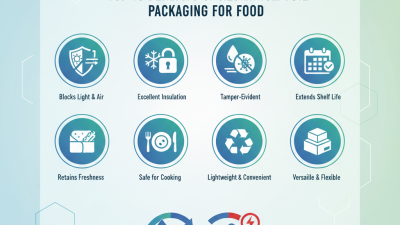
Aluminium foil packaging is made from thin, rolled aluminium sheets. It may appear as a tray, lid, pouch, wrap, or laminated layer. In practical use, its strongest value is protection. Foil blocks light, oxygen, moisture, and many odors. This helps preserve flavor, texture, and product quality during storage and transport. A sealed foil lid can also protect a meal from dust before heating. That small detail matters in busy kitchens.

Manufacturers choose foil because it is light, flexible, and easy to shape. It can fit around food or form rigid containers with precise edges. Foil also handles temperature changes well, which supports baking, chilling, and reheating applications. However, it is not perfect. Thin foil can tear, and laminated packaging may be harder to recycle. Recycling also depends on local collection systems and whether the foil is clean.

Tips: Match the foil structure to the product. Moist foods may need stronger sealing layers. Greasy residue can reduce recycling value, so empty and clean the package when facilities allow it. Check seal quality, thickness, and storage conditions during testing. Do not judge packaging by appearance alone. A shiny surface is not proof of complete protection.

How to Evaluate China’s Leading Aluminium Foil Packaging Manufacturers

How to Evaluate China’s Leading Aluminium Foil Packaging Manufacturers

Choosing among China’s top aluminium foil packaging manufacturers requires more than comparing prices. Start with product specifications, production experience, and quality controls. Check foil thickness, tensile strength, pinhole limits, sealing performance, and coating consistency. A reliable manufacturer should provide recent test reports and clear material traceability. Ask whether its packaging suits your product, filling process, and storage conditions.

Factory evidence matters. Review production lines, inspection equipment, hygiene controls, and staff training. Request samples from different production batches, not only one carefully selected roll. Test them with your actual sealing machine. Small wrinkles or weak seals may appear only during high-speed packing. Confirm applicable food-contact documentation and export quality procedures. Certificates help, but they do not replace independent testing or a practical factory audit.

Tips: Compare at least three suppliers using the same technical brief. Check response speed and how clearly engineers answer questions. Discuss minimum order quantities, lead times, printing accuracy, and corrective-action procedures. Keep written approval samples. A polished catalog can still hide inconsistent coating or poor communication. No checklist is perfect. Your own testing may reveal weaknesses that documents miss. That is why careful evaluation should continue from sampling through regular shipment inspections.

China’s Top 10 Aluminium Foil Packaging Manufacturers

China’s Top 10 Aluminium Foil Packaging Manufacturers

China’s top ten aluminium foil packaging manufacturers are often recognized for converting expertise, stable production, and practical quality control. Their facilities commonly handle foil printing, laminating, slitting, pouch forming, and heat sealing. These processes support food, pharmaceutical, cosmetic, and household packaging applications. Exact rankings can change, however. Capacity alone does not prove reliability.

Strong manufacturers usually provide material certificates, migration test reports, and batch traceability records. Their engineers check foil thickness, pinholes, seal strength, and ink adhesion during production. A typical inspection may include measuring a 0.006-millimeter foil layer and testing seals under controlled heat. Experienced suppliers also discuss storage humidity, filling temperatures, and transport conditions before quoting a design.

Communication matters too. Clear drawings reduce costly mistakes. Samples should match mass production, not merely look attractive in a showroom. Some factories offer impressive machinery but weaker documentation, which deserves careful review. That is an important limitation. Buyers should verify recent audit results, production lead times, complaint handling, and export experience through current records. A reliable manufacturer explains problems directly and proposes measurable corrections. Not every leading supplier fits every project. The best choice depends on barrier requirements, order volume, printing detail, compliance needs, and realistic delivery expectations.

China Top 10 Aluminium Foil Packaging Manufacturers

The table below presents ten anonymized manufacturer profiles based on common aluminium foil packaging capabilities and commercially used product specifications in China. Company names, brands, and proprietary performance data are intentionally excluded.

No. Anonymous Manufacturer Profile Primary Product Focus Common Alloy Grades Typical Thickness Range Typical Width Range Temper Options Surface Finish Typical Applications Common Compliance Requirements
1 Profile A — Flexible Packaging Specialist Household foil and laminated flexible packaging 8011, 1235 0.006–0.020 mm 200–1,600 mm O, H18 Bright, matte, or lightly embossed Food pouches, sachets, household foil Food-contact regulations, ISO 9001
2 Profile B — Pharmaceutical Foil Producer Blister foil and cold-form packaging materials 8011, 8021 0.020–0.200 mm 100–1,500 mm O, H18, H22 Bright, clean, and pinhole-controlled Tablet blister packs, medical sachets GMP-related controls, ISO 9001, traceability
3 Profile C — Food Container Foil Manufacturer Foil containers and food-service lids 8011, 3003 0.030–0.150 mm 200–1,800 mm O, H22, H24 Mill finish or embossed Takeaway trays, baking containers, lids Food-contact compliance, hygiene controls
4 Profile D — Laminated Foil Converter Aluminium foil laminates and barrier structures 1235, 8011, 8079 0.006–0.050 mm 200–1,600 mm O, H18 Plain, coated, printed, or laminated Coffee packs, pet food, retort pouches Food-contact rules, migration testing, ISO 9001
5 Profile E — Industrial Packaging Supplier Heavy-gauge foil and protective packaging 3003, 8011 0.080–0.300 mm 300–1,800 mm O, H22, H24 Mill finish or textured Industrial wrapping, insulation, liners ISO 9001, dimensional inspection
6 Profile F — Confectionery Foil Specialist Decorative foil for confectionery and labels 1235, 8011 0.006–0.030 mm 100–1,500 mm O, H18 Bright, colored, lacquered, or embossed Chocolate wrapping, candy packaging, labels Food-contact requirements, ink and coating controls
7 Profile G — Cosmetic and Personal-Care Packaging Supplier Collapsible tubes, sachets, and decorative laminates 8011, 8079 0.009–0.100 mm 150–1,600 mm O, H18 Bright, coated, printed, or laminated Cosmetic tubes, cream sachets, personal-care packs ISO 9001, restricted-substance controls
8 Profile H — Insulation and Barrier Foil Producer Foil-faced insulation and vapor-barrier materials 8011, 1235 0.012–0.100 mm 300–1,800 mm O, H18 Bright, embossed, or laminated Building insulation, HVAC ducts, moisture barriers ISO 9001, thickness and adhesion testing
9 Profile I — Cable and Technical Foil Supplier Cable shielding and technical barrier foil 1235, 8011 0.010–0.100 mm 100–1,600 mm O, H18 Mill finish or laminated Cable shielding, electronic barrier layers ISO 9001, electrical and dimensional testing
10 Profile J — Export-Oriented Custom Packaging Manufacturer Custom foil rolls, bags, lids, and printed packaging 1235, 8011, 8079, 8021 0.006–0.200 mm 100–1,800 mm O, H18, H22, H24 Bright, matte, embossed, coated, or printed Food, pharmaceutical, household, and industrial packaging ISO 9001, food-contact compliance, export documentation
Specification note: Alloy grades, thicknesses, widths, tempers, and applications shown are standard ranges commonly used in aluminium foil packaging. Actual availability, tolerances, certifications, and minimum order quantities should be confirmed directly with the selected manufacturer.

Key Differences in Products, Industries, and Production Capabilities

China Top 10 Aluminium Foil Packaging Manufacturers?

The strongest manufacturers differ by product design, not production volume alone. The International Aluminium Institute reported 41.6 million tonnes of primary aluminium production in China during 2023. That scale supports stable foil supply, but it does not prove packaging expertise. A reliable shortlist should examine alloy control, foil thickness, pinhole rates, coating accuracy, and food-contact documentation.

Some manufacturers focus on household foil, using thin rolls, easy-tear cartons, and high-speed rewinding lines. Others produce pharmaceutical foil, where barrier performance, cleanroom handling, and printing registration matter more. Flexible packaging suppliers usually combine foil with polymer films and paper. Their advantage is converting capability, not simply rolling capacity. The Smithers report, The Future of Flexible Packaging to 2029, identifies barrier packaging and lightweight structures as continuing market priorities.

Production capability creates another clear divide. Large facilities may operate continuous casting, cold rolling, annealing, slitting, and automated inspection in one site. Mid-sized plants can offer faster customization, especially for printed lids or small minimum orders. However, capacity figures can be difficult to compare. Some companies report installed output, while others report actual annual production. That weakness is often ignored. Buyer audits should verify traceability, recycled-content claims, defect records, and delivery performance. A top-ten ranking should therefore separate commodity suppliers from specialized converters, rather than placing every factory in one list.

How to Choose the Right Chinese Aluminium Foil Packaging Manufacturer

China’s top aluminium foil packaging manufacturers may look similar online, yet their capabilities can differ sharply. The right supplier should match your product, filling process, and target market. Ask for foil alloy, thickness tolerance, coating structure, seal strength, and roll dimensions. A capable factory should explain these details clearly, not hide behind broad claims. Request recent test reports, production photos, and a sample made with your actual artwork. This reveals print alignment, pinholes, wrinkles, and odor more honestly than a polished catalogue.

Tips: Start with a small trial order. Check samples after heat sealing, refrigeration, and transport simulation. Confirm minimum order quantity, lead time, tooling fees, and corrective-action procedures in writing. Keep one approved sample for comparison.

Factory visits or live video audits can strengthen trust. Observe material storage, clean areas, inspection stations, and batch records. Ask how operators handle rejected foil. Traceability matters when a complaint appears months later. A manufacturer with food-contact experience should provide suitable compliance documents for your destination market, supported by current laboratory evidence. Do not accept copied certificates. Verify issuer details and scope. It is also wise to test migration, seal performance, and printing durability independently, although this adds cost. I have seen attractive samples fail during faster filling lines. That possibility deserves attention. Communication quality is another practical test: technical replies should be specific, timely, and consistent across sales and engineering staff. A slightly imperfect sample can reveal more than a perfect presentation.

Aluminium foil thickness should match the packaging application. When choosing a Chinese aluminium foil packaging manufacturer, compare technical capability, thickness tolerance, alloy selection, surface treatment, food or pharmaceutical compliance, lamination quality, minimum order quantity, lead time, and quality-control documentation. The values shown are typical industry thickness ranges represented by their midpoints; actual specifications depend on the product design and required barrier performance.