
Choosing the best Deodorant Container manufacturer in China requires more than comparing catalog photos or low quotations. The right partner must combine material knowledge, stable production, accurate molding, and dependable communication. A container may look polished on a screen yet fail during filling, transport, or repeated daily use. Small details matter. Cap alignment matters. Thread accuracy matters.
Experienced buyers usually examine the complete manufacturing process. This includes resin selection, mold design, injection molding, surface finishing, assembly, and packaging. Reputable suppliers should provide clear specifications, production samples, inspection records, and traceable quality procedures. Factory experience with deodorant packaging is also valuable, especially when the product requires smooth dispensing and secure closure. Certifications can support trust, but they should be checked against current production capabilities. Paperwork alone is not enough.
This guide compares practical factors when assessing a Chinese Deodorant Container manufacturer. These factors include minimum order quantities, customization options, tooling costs, lead times, quality control, and export support. Factory audits or live video inspections can reveal useful details, such as warehouse organization and testing equipment. Still, no supplier is perfect. Samples may perform differently at scale, and communication can occasionally create costly misunderstandings. That is why written specifications and approval samples remain essential. A careful evaluation should balance price with consistency, responsiveness, and long-term reliability. The best manufacturer is not always the cheapest. It is the supplier that can repeatedly deliver suitable containers, explain limitations honestly, and improve when problems appear.
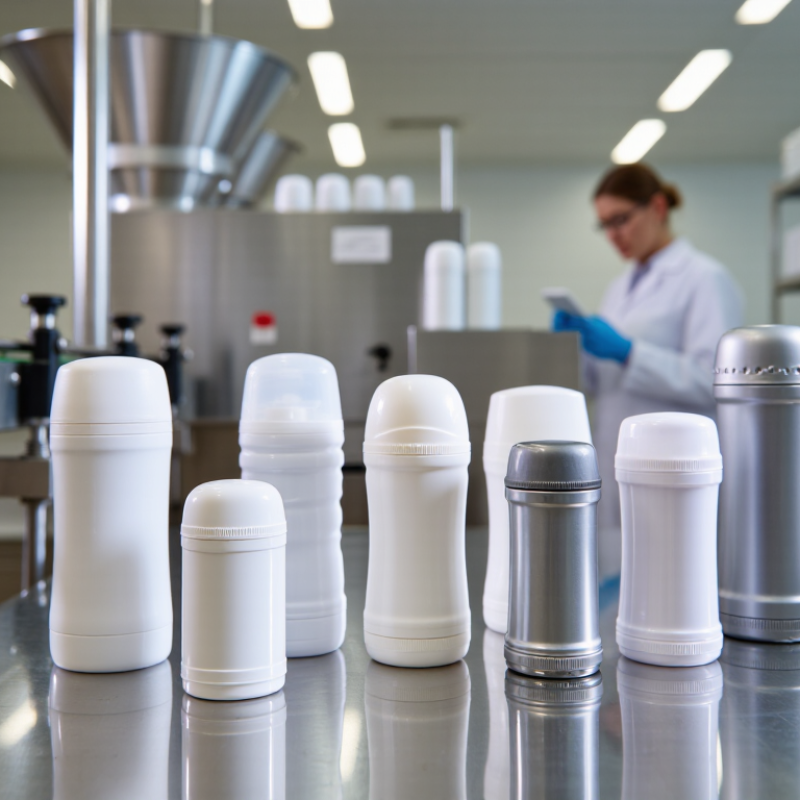
The best deodorant container manufacturer offers more than attractive prices. It combines practical experience, stable production, and clear technical communication. An experienced team understands stick, roll-on, and cream deodorant formats. It can recommend suitable plastics, aluminum, or recycled materials for each formula.
Reliable manufacturers test containers before mass production. They check cap fit, wall thickness, leakage, surface defects, and product compatibility. A useful sample process may include filling trials, drop testing, closure checks, and temperature exposure.
Good engineers also provide drawings, tolerance details, and material documentation. These records make quality easier to verify. Factory audits, production photos, and traceable inspection reports add confidence. Still, no factory is flawless. A supplier that admits a small weakness may be more trustworthy than one promising perfection.
Tips: Request production samples from different batches. Test them with the actual deodorant formula. Check whether the cap closes smoothly after repeated use. Ask about mold ownership, lead times, quality controls, and replacement procedures. Confirm communication speed, not just quoted capacity. A low price can hide expensive delays. I would also review packaging waste and shipping protection, because damaged containers create practical losses. The final choice should balance engineering ability, consistency, responsiveness, and honest problem-solving.
Deodorant packaging should match the formula, application method, and daily handling. Solid sticks usually need rigid PP or ABS containers with a smooth twist mechanism. These materials resist cracking and support clean, controlled product movement. A wide base also improves stability on bathroom counters. Small details matter.
Roll-on deodorants require a reliable bottle, a balanced ball, and a secure cap. PET offers good clarity and impact resistance, while glass creates a heavier, more premium feel. The ball should move evenly without flooding the skin with liquid. For cream deodorants, PP jars or soft tubes can work well. Wide openings help users remove thicker formulas with their fingers.
An experienced Chinese container manufacturer should test material compatibility, cap torque, leakage, drop resistance, and filling-line performance. It should also provide samples before mass production. Recycled materials may support sustainability goals, but their color and odor can vary between batches. That requires careful quality control. I have seen attractive packaging fail because the inner surface reacted with the formula. The design looked right. It was not ready. Suppliers should review wall thickness, sealing surfaces, decoration durability, and shipment protection with the product developer. Sometimes a simpler container performs better than an impressive one.
A reliable deodorant container starts with controlled material selection. Common options include PP, HDPE, and carefully verified recycled content. Each material must suit the formula, application method, and expected storage conditions. Experienced factories inspect resin certificates before production. They also check color, odor, moisture, and contamination risks.
Manufacturing usually begins with injection molding or extrusion, followed by trimming, surface treatment, and assembly. Operators inspect wall thickness, thread accuracy, actuator fit, and base stability. Quality teams use calibrated gauges for dimensions and torque testers for closures. Leak tests may include pressure holding, inversion, and repeated opening cycles. Drop tests reveal weak joints that visual inspection can miss. Compatibility testing checks whether fragrance or active ingredients soften plastic over time. A perfect first sample is not proof of long-term performance. This is where some evaluations become too optimistic.
Tips: Ask for batch records, retained samples, material reports, and test limits before placing an order. Confirm that inspection equipment is calibrated and that failures are documented, not quietly discarded. Request production samples from different cavities, because one excellent cavity cannot represent every container. Independent laboratory testing can add confidence for migration, odor, and formula compatibility. Small defects matter. A loose cap or rough edge can damage user trust, even when the container looks attractive.
A reliable Chinese deodorant container manufacturer should show certifications that match its product and production scope. ISO 9001 demonstrates a controlled quality system, documented inspections, and corrective action. ISO 14001 can indicate structured environmental management, while ISO 45001 supports workplace safety practices. These certificates matter only when the issuing body is accredited and the certificate remains valid. Ask for the original certificate, registration number, covered factory address, and exact product scope. Do not accept a cropped PDF.
For cosmetic packaging, request material declarations and test reports for plastics, elastomers, coatings, and inks. Depending on the market, evidence may include REACH or RoHS-related compliance, but these are not universal substitutes for quality control. Requirements vary by market. If the container is an aerosol package, ask about pressure testing, valve compatibility, and applicable transport approvals. For roll-ons and sticks, check leakage tests, closure torque, drop resistance, and compatibility with the formula. A factory using ISO 22716 should clarify whether it manufactures packaging only or also handles cosmetic filling. This distinction is easy to miss.
Production records should connect incoming material lots to finished cartons and shipment samples. Request batch inspection reports, retained samples, calibration records, and a clear complaint process. A video tour helps, but it cannot replace an independent audit. Polished certificates sometimes hide weak daily controls. That is uncomfortable. Check production data, not presentation alone. I would also require a small pilot order before approving large volumes. A first sample can look excellent, yet repeated batches may reveal color drift or loose caps. That risk deserves attention.
ISO 9001, ISO 14001, and ISO 45001 certificates normally follow a three-year certification cycle, supported by surveillance audits at least once every 12 months. For deodorant containers, buyers should also request current material test reports and evidence of compliance with applicable REACH and RoHS requirements. These regulations are compliance obligations rather than ISO-style management-system certificates.
Comparing Chinese deodorant container manufacturers requires more than checking the lowest quoted price. A reliable buyer examines materials, tooling, testing, and communication together. Request samples made from the proposed resin, not display pieces. Check wall thickness, cap fit, surface finish, and label area under normal handling. Small defects become expensive when thousands of units are filled.
Ask for drawings, tolerance ranges, material certificates, and inspection records. For roll-on, stick, or spray formats, confirm compatibility with the formula and filling line. A competent factory should explain mold life, hourly output, minimum order quantity, and replacement-part availability. Video audits can reveal storage conditions, machine cleanliness, and manual inspection points. Still, remote evidence has limits. An on-site audit or independent inspection gives stronger confidence. Do not treat attractive sustainability claims as proof. Verify recycled content, recyclability statements, and supporting documents.
Compare total cost, not unit price. Include tooling, freight, sampling, rejects, and lead-time risks. Ask how the supplier handles color variation or late mold changes. Clear answers matter. I would score each factory using the same checklist, then repeat sample testing after production approval. This step is easy to skip. It can expose inconsistent torque, scratches, or loose caps before shipment. No comparison is perfect. A supplier may perform well on samples yet struggle during peak demand. Keep written records, define acceptance limits, and leave room for a controlled trial order.
| Comparison Dimension | Practical Buyer Benchmark | Evidence to Request from a Chinese Manufacturer | Suggested Weight | Buyer Rating |
|---|---|---|---|---|
| Container Type and Material | Confirm whether the supplier produces the required format: stick roll-on spray squeeze tube refillable pack. Common materials include PP, HDPE, PET, glass, aluminum and steel. | Product catalogue, technical drawings, material declarations and samples made with the same resin, metal or glass specification as the proposed production version. | 10% | 1–5 points |
| Dimensional Accuracy | Key dimensions should match the approved drawing, including overall height, diameter, neck finish, thread, shoulder profile and closure fit. Tolerances must be agreed before mass production. | Signed technical drawing, dimensional inspection report and measurement records from calibrated equipment such as vernier calipers, thread gauges and coordinate measuring equipment where applicable. | 10% | 1–5 points |
| Closure and Leakage Performance | The container should remain sealed during filling, transport and storage. Test requirements depend on the format, formula, closure design and shipping conditions. | Closure torque records, leak-test procedure, pressure or vacuum test method where relevant, finished-pack samples and transport simulation results. | 12% | 1–5 points |
| Formula Compatibility | The packaging must be compatible with deodorant ingredients such as alcohol, fragrances, oils, surfactants, salts and antiperspirant active ingredients. Compatibility should be validated with the actual formula. | Material compatibility statement, migration or extractables data when required, accelerated aging results and a written test plan using the buyer’s formulation. | 12% | 1–5 points |
| Surface Finish and Decoration | Evaluate color consistency, gloss or matte effect, printing registration, coating adhesion, scratch resistance and appearance after filling. | Approved color standard, physical production samples, rub or abrasion test results, coating specifications and inspection limits for cosmetic defects. | 10% | 1–5 points |
| Material and Product Safety | Materials should comply with the destination market’s packaging and chemical requirements. For plastic packaging, request resin identification and applicable food-contact or general chemical compliance documents when relevant. | Material safety data, declarations of compliance, restricted-substance test reports and batch traceability records. For EU sales, check applicable REACH and packaging requirements; for US sales, verify relevant FDA requirements where applicable. | 12% | 1–5 points |
| Quality Management System | A documented quality system should control incoming materials, in-process inspection, final inspection, nonconforming products, corrective actions and customer complaints. | Valid ISO 9001 certificate, audit report, quality manual or process map, inspection standards, corrective-action records and traceability procedure. | 10% | 1–5 points |
| Production Capacity and Process Control | Capacity should be sufficient for the buyer’s forecast without compromising lead time or quality. Verify whether molding, injection, extrusion, metal forming, printing and assembly are performed in-house or outsourced. | Machine list, production-line capacity, current utilization, shift information, process flow chart and a clear list of approved subcontractors. | 8% | 1–5 points |
| Minimum Order Quantity and Scalability | Compare minimum order quantities separately for standard containers, custom molds, custom colors, special decoration and new closures. Tooling cost and ownership terms should be documented. | Written quotation showing MOQ by item, mold or tooling charges, sampling charges, repeat-order conditions, annual-volume discounts and tooling ownership. | 8% | 1–5 points |
| Sampling and Product Development | A reliable supplier should provide drawings, prototypes and pre-production samples before mass production. Critical approval samples should be retained for comparison during production. | Sample-development schedule, prototype method, first-article inspection report, approval workflow and documented change-control procedure. | 6% | 1–5 points |
| Lead Time and Delivery Reliability | Compare lead time for samples, tooling, first production and repeat orders. The quoted lead time should identify the start point, approval requirements and shipping terms. | Production schedule, recent on-time-delivery data, capacity plan, safety-stock policy and Incoterms such as EXW, FOB or CIF stated in the quotation. | 6% | 1–5 points |
| Sustainability and Recyclability | Compare recycled-content options, mono-material designs, lightweighting, refill systems and recyclability in the target market. Claims should be supported by material and supply-chain evidence. | Recycled-content declaration, mass-balance or chain-of-custody documents where applicable, life-cycle information, packaging-weight data and recyclable-material specifications. | 4% | 1–5 points |
| Communication and After-Sales Support | Assess response speed, technical English, documentation quality, complaint handling, replacement policy and willingness to support filling-line trials. | Named project contact, response-time commitment, complaint procedure, corrective-action template, spare-parts policy and references from comparable packaging projects without relying only on marketing claims. | 2% | 1–5 points |